Top 10 Eot Crane Models to Consider for Your Next Project?
In the world of industrial lifting, Eot Cranes play a pivotal role in enhancing productivity and safety. Renowned industry expert, John Thompson, once stated, “Choosing the right Eot Crane can redefine your project’s efficiency.” As businesses strive for better operational efficiencies, selecting the appropriate Eot Crane models is crucial. Each model possesses distinct features, making them suitable for various applications in construction, manufacturing, and logistics.
When considering an Eot Crane for your next project, it helps to understand the nuances involved. For instance, lifting capacities, span lengths, and operational environments can significantly influence your choice. Additionally, the integration of advanced technology in these cranes enhances their functionality. However, not all models will meet your specific requirements. It can be overwhelming, and making the right choice is essential for success.
Navigating through the top models can reveal insights into design and performance. Each Eot Crane has strengths and weaknesses, requiring careful evaluation. Ultimately, the goal is to select a crane that not only meets demands but also contributes to safety and efficiency. Take time to reflect on your unique project needs before making a decision.
Understanding Eot Cranes: Definition and Functionality
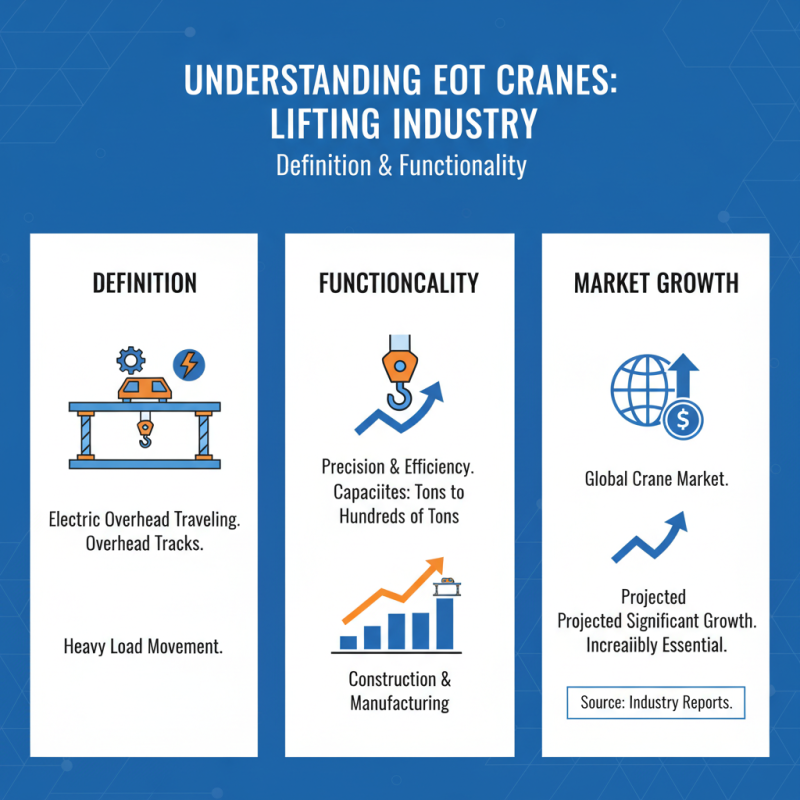
Eot cranes, or Electric Overhead Traveling cranes, play a vital role in various industries. They facilitate the movement of heavy loads with precision and efficiency. Eot cranes are designed to operate on overhead tracks, lifting capacities can range from a few tons to hundreds of tons, depending on the model and application. According to industry reports, the global crane market is projected to grow significantly, with Eot cranes becoming increasingly essential in construction and manufacturing sectors.
When selecting an Eot crane, consider the specific needs of your project. Load capacity, span length, and height are critical factors. For tasks involving heavy materials, high-capacity models that can withstand long-term usage are recommended. Additionally, ensuring proper maintenance is essential to avoid unexpected breakdowns. Regular inspections contribute to safety and prolong the lifespan of the equipment.
Tip: Ensure your team receives thorough training on crane operation. This reduces risk and improves efficiency. Also, factor in future project demands. Choosing a versatile model may save costs in the long run. Keep in mind, not every Eot crane will fit every project, so do careful research and assessment.
Key Factors to Consider When Selecting Eot Crane Models
When selecting EOT crane models, various factors play a crucial role. Load capacity is paramount. Consider the weight of materials you need to lift. A model with insufficient capacity may lead to safety hazards. It's vital to assess the maximum loading limits of each crane.
Span and lift height are significant too. Evaluate the space available in your project area. Some cranes are better suited for tight spaces. The height requirements can also determine which model to choose.
Durability and maintenance are often overlooked. Cranes endure heavy use, and regular wear can impact performance. Discussing maintenance plans with experienced operators can reveal insights. Remember, investing in durability can save costs in the long run. Don't underestimate the need for expert advice in this decision-making process. Balancing these factors may feel overwhelming, but it is essential for project success.
Top 10 Eot Crane Models and Their Load Capacities
This chart displays the load capacities of the top 10 Eot crane models, providing a quick comparison for project considerations.
Top 10 Eot Crane Models for Various Industrial Applications
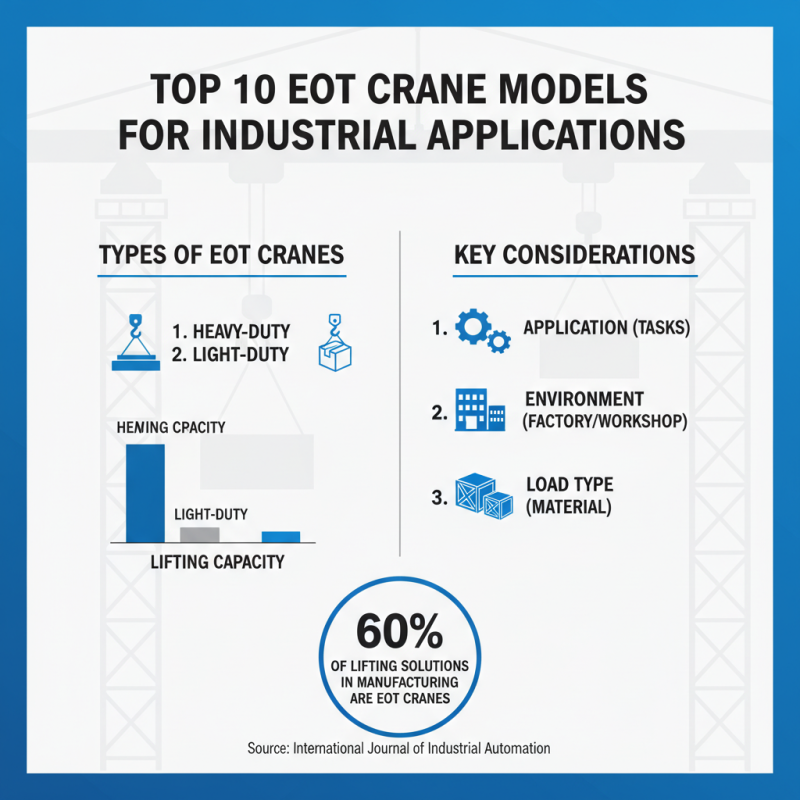
When considering EOT (Electric Overhead Traveling) cranes for industrial applications, it’s crucial to align the crane model with specific tasks. Various models excel in different environments. For instance, heavy-duty cranes display high lifting capacities, while light-duty models cater to smaller, less demanding projects. According to the International Journal of Industrial Automation, EOT cranes account for about 60% of lifting solutions in manufacturing.
Material handling performance varies significantly across industries. In construction, robust cranes assist in moving steel beams and concrete. Meanwhile, in manufacturing, precision is paramount for assembling components. Research from the Crane Safety Association highlights that improper crane selection can lead to accidents and efficiency loss, emphasizing the importance of choosing the right model.
Customizability is another crucial factor. Clients often seek options that include features like remote control and automated systems. These enhancements improve safety and minimize manual labor. However, integrating advanced technology poses challenges. Operators must undergo training to handle these systems effectively. With the right EOT crane, industries can enhance productivity significantly, but ongoing evaluation and adjustment are vital for maximizing performance.
Comparison of Features and Specifications of Leading Eot Cranes
When selecting an EOT crane for your next project, it’s essential to compare features and specifications meticulously. Different crane models offer varying load capacities, span lengths, and lifting heights. Each detail can significantly impact project efficiency. For instance, a crane with a higher lifting speed can enhance productivity, while a more extended span may allow for improved maneuverability in tight spaces.
Moreover, safety features should never be overlooked. Load limiters, emergency stop systems, and anti-collision technologies are vital for preventing accidents. Some models may also include advanced control systems that provide better visibility and ease of operation. Evaluating these aspects can help ensure you choose a crane that meets the specific needs of your operation.
Keep in mind that not all models are suitable for every environment. For example, indoor cranes may differ greatly from those designed for outdoor use. Environmental factors, such as temperature and humidity, should also be considered in your decision process. It’s worth reflecting on past projects to identify what features proved most beneficial. This approach fosters better decision-making, minimizing the risk of oversights in selecting your next EOT crane.
Maintenance and Safety Tips for Eot Crane Operations
When operating EOT (Electric Overhead Traveling) cranes, safety and maintenance are paramount. Regular inspections help identify potential issues before they escalate. Ensure that the crane’s components, such as cables and hooks, are in good condition. Damaged parts can lead to accidents. Schedule maintenance routinely, and keep detailed records to track repairs. A well-maintained crane not only operates more efficiently but also minimizes risks to operators and nearby personnel.
Training for crane operators is essential. Operators should be familiar with safety protocols and emergency procedures. They should understand weight limits and load balancing. Misjudging these factors can lead to catastrophic failures. It is crucial to have clear communication among team members during lifting operations. Using hand signals or radios can prevent misunderstandings and mistakes. Consistent training and refreshers can cultivate a culture of safety on the job site.
Consider the environment where the crane operates. Weather conditions can affect visibility and equipment performance. Rain, snow, or high winds might make operations unsafe. It is important to assess these factors before proceeding with lifting tasks. Lastly, encourage a mindset of reflecting on past operations. Analyzing previous challenges can lead to improved safety practices. This proactive approach fosters a safer workplace for everyone involved.
Top 10 Eot Crane Models to Consider for Your Next Project - Maintenance and Safety Tips for Eot Crane Operations
| Model |
Load Capacity (Tons) |
Span (Meters) |
Height (Meters) |
Key Features |
| Model A |
10 |
15 |
6 |
High Efficiency, Compact Design |
| Model B |
15 |
20 |
7 |
Multi-purpose, Advanced Controls |
| Model C |
20 |
25 |
8 |
Heavy-duty, High Stability |
| Model D |
5 |
10 |
5 |
Space-saving, Lightweight |
| Model E |
10 |
15 |
6 |
Energy Efficient, Easy Maintenance |
| Model F |
25 |
30 |
9 |
High Precision, Safety Features |
| Model G |
12 |
18 |
7.5 |
Robust Design, User-friendly |
| Model H |
18 |
22 |
8 |
Versatile Application, Innovative Technology |
| Model I |
22 |
26 |
9 |
Streamlined Operations, Enhanced Safety |
| Model J |
30 |
35 |
10 |
Excellent Range, High Durability |