10 Essential Tips for Choosing the Right Girder Crane for Your Needs?
Choosing the right girder crane for your operations can be a challenging task. A girder crane is essential in various sectors, including manufacturing and construction. Each project demands unique capacities and specifications. Understanding these requirements is vital for making an informed choice.
Many factors influence the selection of a girder crane. For instance, consider the weight capacity needed and the type of materials you will be lifting. Look for cranes that align with industry standards, such as ISO or CE certifications. Paying attention to these details can prevent costly mistakes later.
Moreover, make sure to evaluate the available space and the crane's range of motion. Will it fit in your workspace? Can it operate efficiently without disruptions? Reflecting on these questions can lead to a better purchase decision. Remember, in choosing a girder crane, small oversights can have significant impacts. Always strive for clarity in your requirements.
Understanding the Different Types of Girder Cranes Available
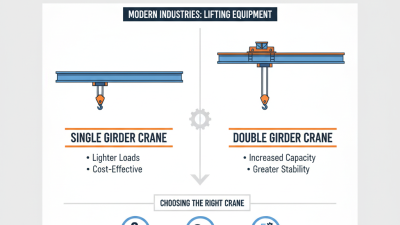
When selecting a girder crane, understanding the available types is crucial. There are several options, including single girder and double girder cranes.
Single girder cranes are typically lighter and more cost-effective. They often work well in smaller spaces.
Double girder cranes, on the other hand, provide greater lifting capacity. They are ideal for heavier loads but may require more headroom.
Another variation is the underslung crane design. These cranes are mounted on the underside of the runway and are effective for low ceilings.
They save vertical space and maintain flexibility. For specialized tasks, you might consider specialized cranes designed for specific applications.
However, these can be more complex and may not always be necessary.
Reflecting on your needs is vital. Assess your workspace and load requirements carefully.
Consider how often the crane will be used. A more robust crane may be needed for frequent, heavy loads.
But if your tasks are light and sporadic, a simpler model could suffice. Keep in mind that not all cranes are suitable for every environment.
Assessing Your Load Capacity Requirements for a Girder Crane
When selecting a girder crane, understanding your load capacity is critical. Load capacity determines how much weight the crane can safely lift and move. For instance, a report by the American Crane and Hoist Manufacturers Association (ACHM) indicates that improper capacity estimates can lead to accidents. Each crane is designed for specific load limits, often ranging from 1 ton to over 100 tons. Therefore, knowing your specific requirements is essential for safety and efficiency.
Before making a choice, assess the maximum weight you expect to lift. Consider peak loads, not just average ones. It’s essential to account for future increases in load requirements. A survey by OSHA reveals that nearly 50% of workplace lifting accidents stem from overloading. Reflect on current and projected needs. A crane with a slight overestimation in load capacity can be a wise choice.
Evaluate material types and load dynamics. Different materials behave differently under stress. For example, steel beams distribute weight differently than aluminum. This affects your crane choice greatly. Recognizing these factors will help avoid costly mistakes. It’s crucial to think about the long-term implications of your choice, as underestimating capacity can cause operational delays and increased maintenance costs.
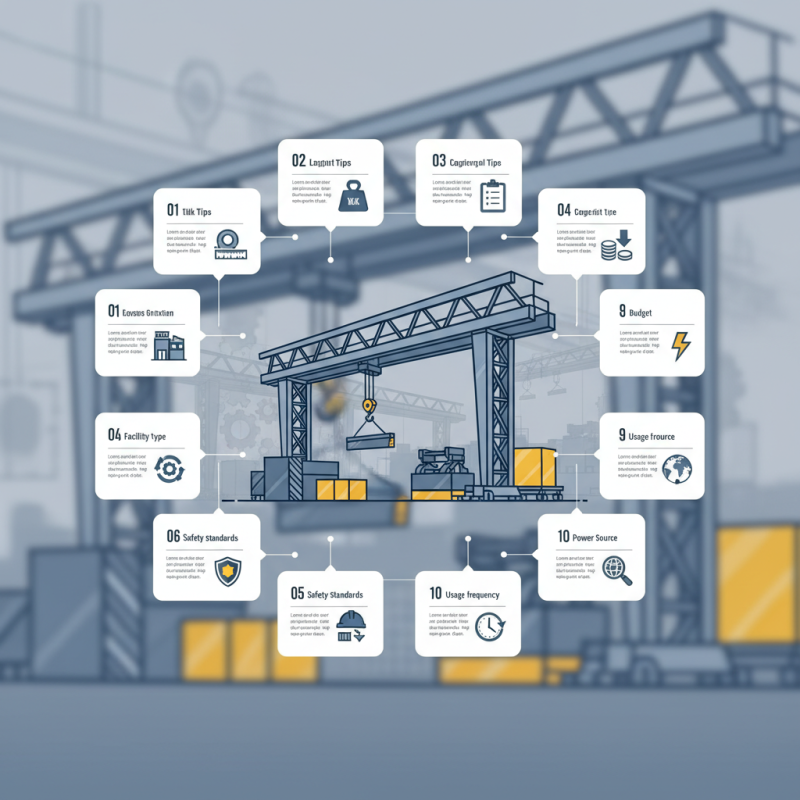
10 Essential Tips for Choosing the Right Girder Crane for Your Needs
| Tip Number |
Tip Description |
Load Capacity (Tons) |
Span Length (Feet) |
Headroom Requirements (Inches) |
| 1 |
Determine the Maximum Load You'll Lift |
5 |
20 |
100 |
| 2 |
Assess the Frequency of Use |
10 |
30 |
120 |
| 3 |
Consider the Environment and Conditions |
15 |
40 |
150 |
| 4 |
Evaluate Safety Features Required |
20 |
50 |
200 |
| 5 |
Review the Type of Load to be Moved |
25 |
60 |
250 |
| 6 |
Choose between Single or Double Girder Cranes |
30 |
70 |
300 |
| 7 |
Ensure Accurate Installation Space Measurement |
35 |
80 |
350 |
| 8 |
Plan for Future Expansions in Capacity |
40 |
90 |
400 |
| 9 |
Check Compliance with Regulations |
45 |
100 |
450 |
| 10 |
Consult with Professionals for Selection |
50 |
110 |
500 |
Evaluating the Space and Height Constraints for Crane Installation
When evaluating space and height constraints for crane installation, it’s crucial to assess the environment. Measure the available height. Can your crane fit below beams? Is there sufficient space for movement? These details can change everything. Think about the layout of the area. Does it accommodate a large base?
Consider any obstacles that may interfere. Columns, walls, and other equipment might limit crane mobility. Look up, down, and all around. Sometimes, even slight adjustments can make a significant difference in crane operation. Ensure the guarantees of sufficient clearance for both lifting and traveling.
Don’t forget the future. Are you planning any expansions? What if the workload increases? Having extra space might be an afterthought now, but it can save hassle later. Anticipating needs will make your choice easier. Sometimes, a bit more budget now can prevent costly retrofits down the line. Planning well is essential, but don’t rush. Reflecting on these elements often helps you avoid future errors.
Budgeting for Purchase, Installation, and Maintenance of Girder Cranes
Budgeting for a girder crane involves multiple factors. Initially, assess the purchase price. This is often a large chunk of the budget. However, don't forget additional costs. Installation expenses can add up quickly. Depending on the complexity, you may need professionals.
Maintenance costs can be overlooked. Regular upkeep is crucial for longevity. Set aside funds for routine checks and repairs. Unexpected issues can arise. Allocate a portion of your budget for emergencies. This prevents future financial strain.
Consider the operating environment. Harsh conditions may increase maintenance needs. Think about how often the crane will be used. Frequent operations can lead to wear and tear. It’s essential to plan for these factors. Accurate budgeting can save headaches later on. Reflect on your specific needs before making final decisions.