How to Choose the Right Bridge Crane for Your Needs?
Choosing the right bridge crane is critical for operational efficiency. The global crane market is projected to reach $29.3 billion by 2026, with bridge cranes playing a significant role. These machines enhance productivity and safety in various industries, including manufacturing and construction.
However, selecting the perfect bridge crane is not always straightforward. Each application has unique requirements. Factors such as load capacity, span length, and lift height must be considered. According to recent industry reports, 45% of crane failures stem from improper specifications. This can lead to costly downtime and safety hazards.
Understanding the specifics of your operation is essential. Evaluate your workflow, available space, and equipment integration requirements. Common pitfalls include overlooking maintenance needs and operator training. Reflecting on these factors can ensure a better investment in a bridge crane that meets your organization’s needs.

Understanding Different Types of Bridge Cranes Available in the Market
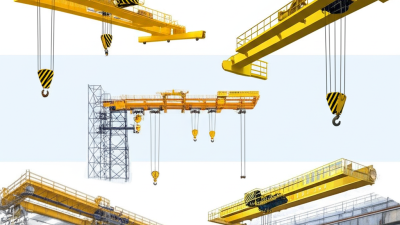
When selecting a bridge crane, understanding the various types is crucial. There are several categories to consider. The most common varieties include
underhung cranes, top-running cranes, and double girders. Each type serves different operational needs and environments.
Industry reports show that nearly 30% of manufacturing facilities opt for top-running cranes due to their versatility and lifting capacity.
Underhung cranes are often used in smaller spaces. They require less headroom and offer excellent maneuverability.
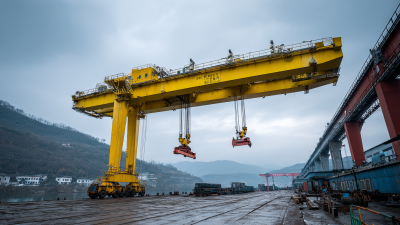
Double girder cranes, on the other hand, provide greater load capacities and stability, making them suitable for heavy-duty applications.
However, they can be more expensive and complex to install.
A study highlighted that around 40% of industries still underestimate the importance of matching crane type to operational size and load requirements.
It’s not uncommon for businesses to choose a bridge crane based solely on cost or recommendations. This can lead to mismatched capabilities over time.
For instance, a single girder crane may suffice for light loads, but opting for it in a heavy-load scenario risks operational inefficiencies.
The long-term costs of repairs or replacements can quickly escalate. Therefore, careful consideration of the unique demands and environment is essential before making a decision.
Assessing Your Load Capacity Requirements for Bridge Cranes
When selecting a bridge crane, understanding your load capacity requirements is essential. Many industries work with varying weights. For example, production plants often handle loads between 5,000 to 20,000 pounds. However, heavy industries may require cranes capable of lifting 50,000 pounds or more. Knowing the weight limits helps avoid costly mistakes.
It’s important to consider not only the maximum load but also the dynamics of lifting. A crane that lifts 20,000 pounds safely may not perform well if the load is not evenly distributed. Industry standards recommend accounting for a safety margin of about 20-25%. This margin accounts for unexpected shifts. If you plan for a load of 15,000 pounds, consider a crane with at least a 18,750-pound capacity.
In some cases, companies choose cranes based solely on theoretical data. This decision can lead to challenges. Factors such as material composition and shape also impact lifting efficiency. A poorly chosen crane can result in uneven wear or operational failures. Regular assessments and adjustments based on real-world usage are crucial for maintaining optimal performance.
Evaluating the Work Environment and Space Constraints for Installation
When choosing the right bridge crane, it's essential to evaluate your work environment and space. The installation area must have a clear understanding of overhead obstructions. Things like beams, lights, and pipes can limit crane movement. If your space is tight, a compact crane may be a better fit. Measure the height of your building and the width of your work area carefully.
Tips: Always assess the load capacity needed. If you underestimate this, it might lead to dangerous situations. Paying attention to the floor condition is also crucial. A level and strong surface helps maintain stability.
Consider your workflow too. If your operation involves frequent movements, a longer bridge may be necessary. Space around the installation site is vital for safe operation. Ensure there is enough room for maintenance access. Revisit your initial measurements. Mistakes can be costly and dangerous. Take the time to ensure accuracy in your assessments.
Considering Budget, Maintenance, and Lifespan of Your Bridge Crane Options
Choosing the right bridge crane involves careful consideration of various factors. Budget constraints play a significant role. It’s essential to balance quality and cost. Often, lower-priced options may lead to higher maintenance costs down the line. This trade-off can strain your finances. Have you considered long-term costs? Sometimes, investing a bit more upfront can save you money later.
Maintenance is another critical factor. Every bridge crane requires upkeep, and some models demand more than others. If you overlook this aspect, your crane may not operate efficiently. Regular inspections and repairs add to overall costs. Assess your team's capability to handle maintenance. Can they manage it effectively? For some, hiring external services could be more practical.
Lifespan also warrants attention. A durable crane can serve you for many years. But how do you determine quality? Look for materials and construction standards. Even the best cranes can have issues, especially if overused or poorly installed. Reflect on your operational needs. Are you pushing the limits? Knowing your requirements helps make a smarter choice.
How to Choose the Right Bridge Crane for Your Needs?
| Crane Type |
Load Capacity (tons) |
Price Range ($) |
Maintenance Frequency (per year) |
Expected Lifespan (years) |
| Overhead Crane |
5 |
10,000 - 25,000 |
1 |
20 |
| Gantry Crane |
10 |
15,000 - 35,000 |
1 |
25 |
| Jib Crane |
2 |
5,000 - 10,000 |
1 |
15 |
| Wall-Mounted Crane |
1 |
3,000 - 8,000 |
1 |
10 |