Why Choose Over Head Bridge Crane for Your Material Handling Needs
In today’s fast-paced industrial environment, the efficiency of material handling systems plays a crucial role in overall productivity and safety. Among the various solutions available, the Over Head Bridge Crane stands out as a preferred choice for many businesses. According to a recent report by the Material Handling Industry of America (MHIA), the use of cranes in manufacturing and warehousing can improve operational efficiency by up to 40%. Such data underscores the transformative impact of incorporating advanced material handling technologies.
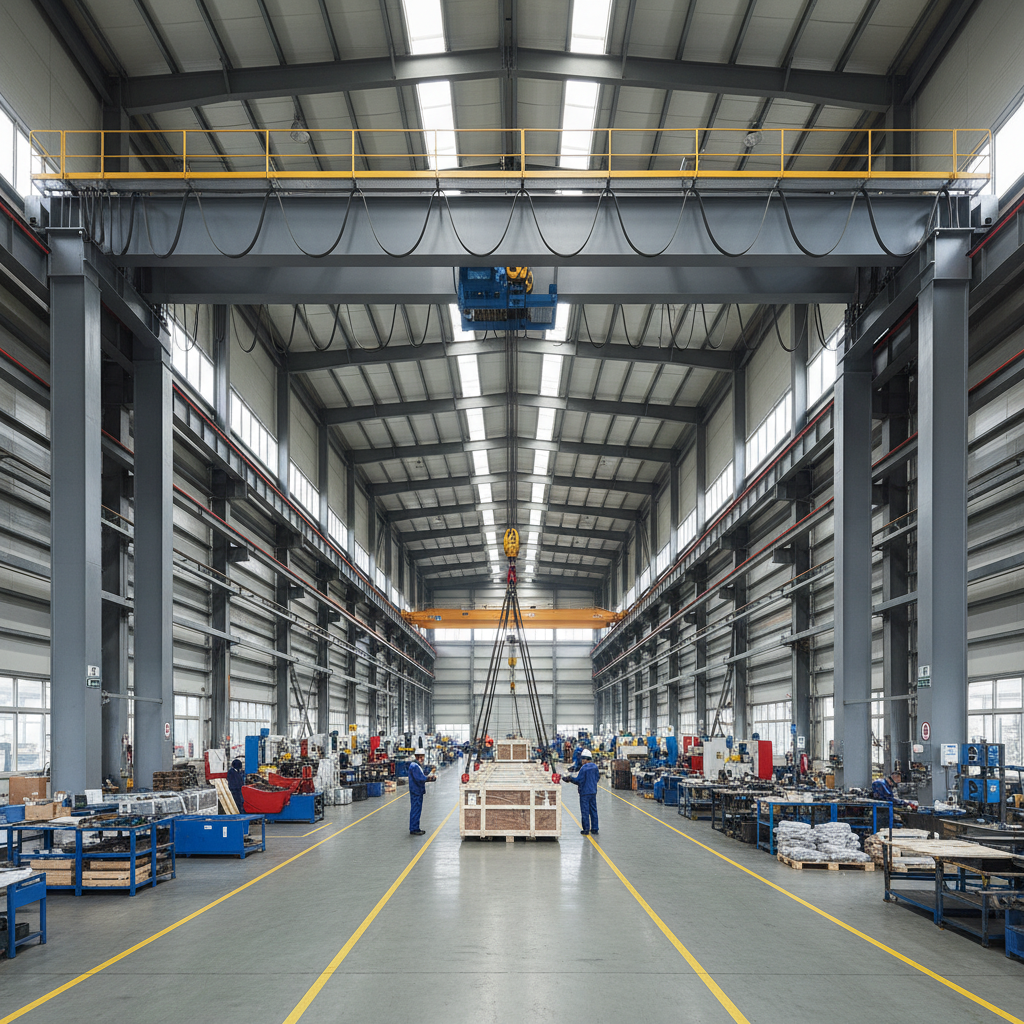 Experts in the field, like Dr. James L. Emerson, a renowned material handling specialist, emphasize the significance of this equipment for modern industrial operations. He states, "The Over Head Bridge Crane not only optimizes space utilization but also enhances workflow, allowing for smoother transitions between loading and unloading." The strategic implementation of Over Head Bridge Cranes can lead to reduced labor costs and minimized downtime, essential factors for thriving in today's competitive market.
As businesses strive to meet ever-growing demands, investing in Over Head Bridge Cranes appears not only beneficial but essential. With their ability to handle heavy loads, provide versatile lifting solutions, and ensure safety, Over Head Bridge Cranes are becoming indispensable in achieving more streamlined operations and superior handling processes in various sectors.
Advantages of Overhead Bridge Cranes in Industrial Settings
Overhead bridge cranes offer significant advantages in industrial settings, particularly for material handling. One of the primary benefits is their ability to maximize space utilization. By operating above the production floor, these cranes free up valuable ground space, allowing for smoother workflow and easier movement of personnel and equipment. This overhead design makes them ideal for facilities where floor space is limited, as they can handle heavy loads without compromising floor usage.
Another advantage is the increased safety and efficiency in material handling processes. Overhead bridge cranes can lift and transport heavy items, reducing the risk of back injuries and accidents associated with manual handling. They are designed with advanced safety features, such as limit switches and emergency stop buttons, which enhance operational safety. Furthermore, the precision with which these cranes can maneuver loads minimizes the risk of spills and accidents, contributing to a safer workplace. Their capability to reach difficult areas and lift items to various heights further enhances their effectiveness, making them a preferred choice for industries ranging from manufacturing to warehousing.
Why Choose Over Head Bridge Crane for Your Material Handling Needs
| Advantage |
Description |
Typical Applications |
| Increased Safety |
Overhead cranes reduce the risk of accidents by minimizing ground-level pedestrian interactions. |
Factories, Warehouses |
| Space Efficiency |
They free up floor space, allowing for more efficient utilization of the workspace. |
Manufacturing Facilities, Distribution Centers |
| Versatility |
Can be used for a wide range of lifting and moving tasks across multiple industries. |
Construction Sites, Shipping Ports |
| Increased Productivity |
Facilitates faster movement of materials, thereby improving overall workflow efficiency. |
Heavy Industry, Warehousing |
| Precision Control |
Allows for better control when handling heavy and delicate loads with precision. |
Manufacturing, Aerospace |
Key Features of Overhead Bridge Cranes for Efficient Material Handling
 Overhead bridge cranes are essential for efficient material handling in various industries, offering distinct advantages over traditional lifting methods. One of the key features of these cranes is their ability to optimize space utilization. By operating along overhead tracks, they free up valuable floor space that can be used for production or storage. This vertical lifting mechanism allows for smooth and safe handling of heavy loads, resulting in improved workflow and productivity.
Another significant benefit of overhead bridge cranes is their precision and control in lifting operations. Equipped with advanced hoisting systems and control technologies, these cranes can maneuver heavy materials with great accuracy. This not only enhances the safety of workers but also minimizes the risk of damage to the materials being handled. Furthermore, the durability and robustness of overhead bridge cranes make them suitable for heavy-duty applications, ensuring they can withstand the rigors of demanding environments while providing long-term reliability.
Comparing Overhead Bridge Cranes to Other Material Handling Equipment
When it comes to material handling, overhead bridge cranes stand out among various equipment options. Unlike forklifts or pallet jacks, which are limited to ground-level maneuvering, overhead bridge cranes operate on elevated tracks, allowing them to lift and move materials across large areas with ease. This vertical movement not only maximizes floor space but also minimizes the risk of obstruction and congestion on the shop floor. Their ability to handle heavy loads with precision makes them ideal for industries such as manufacturing and construction, where robust lifting solutions are crucial.
Moreover, overhead bridge cranes offer significant advantages over conveyor systems and hoists. While conveyors are excellent for moving items along a predetermined path, they lack the flexibility to adapt to changing layouts or workloads. In contrast, overhead cranes can navigate various routes within their operational range, catering to dynamic material movement needs. Hoists, while effective for lifting, generally require additional equipment to move items horizontally. This complicates operations and may lead to inefficiencies. Overhead bridge cranes streamline processes by integrating both lifting and horizontal movement capabilities, thereby presenting a superior solution for a wide range of material handling applications.
Comparison of Material Handling Equipment
This chart compares the lifting capacities and operational efficiencies of Overhead Bridge Cranes against other types of material handling equipment such as Forklifts and Pallet Jacks. The data shows typical capacities in tons and their usage efficiency ratings on a scale of 1 to 10.
Factors to Consider When Selecting Overhead Bridge Cranes
When selecting an overhead bridge crane for material handling, several key factors must be considered to ensure optimal performance and safety.
First, the load capacity is critical. According to the Crane Manufacturers Association of America (CMAA), cranes are available in various capacities typically ranging from
1 ton to over 1,000 tons. Understanding the maximum load your operation demands helps in choosing a crane that meets specific requirements
without risking structural integrity or workplace safety.
Another important factor is the span of the crane, which affects the lifting height and the operational footprint. A report by the
American National Standards Institute (ANSI) indicates that the span can significantly influence the efficiency of material handling processes.
Additionally, environmental factors such as temperature variations or exposure to corrosive substances should be taken into account, as cranes may be
designed to withstand specific conditions, enhancing job longevity and reducing maintenance needs. Assessing these factors not only contributes to operational
efficiency but also ensures compliance with industry safety standards, ultimately safeguarding workers and equipment.
Future Trends in Overhead Bridge Crane Technology and Design
The future of overhead bridge crane technology is poised for significant advancements, driven by the integration of smart technologies and automation. As industries increasingly seek to optimize efficiency, manufacturers are developing cranes equipped with Internet of Things (IoT) capabilities. These intelligent systems allow for real-time monitoring of crane performance and load conditions, enabling predictive maintenance and minimizing downtime. Furthermore, data analytics will empower operators to make informed decisions to enhance operational productivity.

In addition to smart features, the design of overhead bridge cranes is evolving to prioritize safety and ergonomics. New materials and construction techniques are being utilized to produce lighter yet robust structures, which reduce energy consumption and increase the flexibility of operations. Innovations such as advanced control systems and remote operation interfaces not only improve safety by reducing operator exposure to hazards but also streamline the handling process. As these trends continue to develop, businesses will be better equipped to meet their material handling needs efficiently and safely.