Top Benefits of Using Overhead Bridge Cranes for Your Industrial Operations
The efficiency and safety of industrial operations are paramount in today's fast-paced manufacturing environments. One key element that enhances both aspects is the use of Overhead Bridge Cranes. These cranes are designed to lift and transport heavy loads across a wide workspace, providing remarkable versatility and significantly improving workflow. With their ability to utilize vertical space, Overhead Bridge Cranes not only optimize facility layouts but also reduce the risk of injuries associated with manual handling of heavy materials.
Integrating Overhead Bridge Cranes into your operations can lead to substantial benefits, from increased productivity to enhanced safety measures. They allow for better organization of materials, minimizing the time and effort required to move items from one location to another. Additionally, their robust construction and reliability contribute to long-term cost savings for businesses by reducing downtime and maintenance needs. As industries continue to evolve, the adoption of Overhead Bridge Cranes stands out as a strategic investment in operational excellence.

Overview of Overhead Bridge Cranes in Industrial Settings
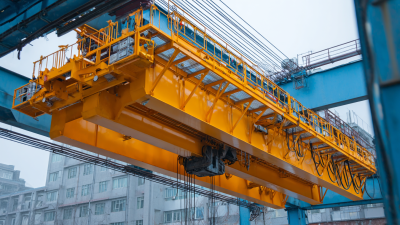
Overhead bridge cranes are critical equipment used in various industrial settings, playing a vital role in enhancing operational efficiency and safety. These cranes consist of parallel runways that support a movable bridge, which can lift and transport heavy loads across a factory or warehouse floor. Their design allows for maximum space utilization while minimizing workplace hazards, making them a preferred option for businesses involved in manufacturing, construction, and warehousing.
In industrial environments, overhead bridge cranes offer numerous advantages. They are capable of handling heavy loads with precision, improving workflow and reducing the time required for material handling. The ability to lift and move loads without the need for manual labor not only enhances productivity but also minimizes the risk of injuries associated with lifting heavy objects. Additionally, these cranes can be configured to meet specific operational needs, providing flexibility in various applications, such as assembly lines, shipping docks, and maintenance facilities. Overall, the integration of overhead bridge cranes into industrial operations can lead to streamlined processes and a safer working environment.
Key Advantages of Using Overhead Bridge Cranes
Overhead bridge cranes are becoming increasingly popular in various industrial settings due to their impressive range of benefits. One of the key advantages of utilizing these cranes is their ability to optimize workspace efficiency. By allowing for vertical lifting and movement, overhead bridge cranes minimize floor space usage while maximizing operational capabilities. This is particularly beneficial in environments where space is limited, as items can be moved and stored more strategically, leading to enhanced workflow and productivity.
Another significant advantage of overhead bridge cranes lies in their versatility and adaptability. These cranes can be designed to accommodate different lifting capacities and configurations, making them suitable for handling various types of loads, from heavy machinery to delicate materials. Their customizable nature also means they can be tailored to meet the specific needs of different industries, including manufacturing, warehousing, and construction. This adaptability not only streamlines operations but also contributes to improved safety, as the risk of accidents and injuries is reduced when tools are specifically designed for particular tasks.
Improved Safety Measures with Overhead Bridge Cranes
The implementation of overhead bridge cranes in industrial operations significantly enhances safety measures within the workplace. According to the Occupational Safety and Health Administration (OSHA), crane-related accidents account for a substantial percentage of workplace injuries, often due to improper usage or equipment failure. However, the use of overhead bridge cranes can mitigate these risks by providing operators with improved control over heavy lifting tasks, minimizing the need for manual labor in high-risk areas. Research indicates that when companies adopt overhead bridge cranes, they can reduce the likelihood of accidents by as much as 30%, primarily through enhanced visibility and operational efficiency.
Additionally, overhead bridge cranes support ergonomics and reduce operator fatigue, further contributing to a safer work environment. A study from the National Institute for Occupational Safety and Health (NIOSH) highlights that repetitive strain injuries are a leading cause of workplace injury, often linked to manual lifting methods. By utilizing overhead cranes, companies can alleviate physical strain on workers. Effective lifting equipment allows for collaborative operations, ensuring that heavy loads are managed by machines rather than by human strength alone. This not only enhances safety but also promotes a healthier workplace, fostering productivity and reducing costs associated with injury-related downtime. As industries continue to emphasize safety, the integration of overhead bridge cranes stands out as a critical component in advancing operational protocols.
Enhanced Efficiency and Productivity Through Crane Systems
Overhead bridge cranes have become a pivotal component of many industrial operations, significantly enhancing efficiency and productivity. These robust systems provide seamless lifting and transportation of heavy loads across large facilities, minimizing the need for manual handling. The ability to move materials quickly and safely from one point to another not only accelerates workflows but also reduces the risk of workplace injuries.
Operators can control the cranes easily, allowing for precise movements that improve operational effectiveness and decrease downtime.
Moreover, the design of overhead bridge cranes facilitates better space utilization within industrial environments. By utilizing the overhead space, businesses can clear valuable floor areas, which can be repurposed for other activities. This maximization of space contributes to a more organized work environment, streamlining processes and enhancing collaboration among workers. As operations become more efficient, companies often see a marked increase in output and a reduction in operational costs, solidifying the overhead bridge crane as an essential tool for modern industrial applications.
Versatility of Overhead Bridge Cranes for Various Applications
Overhead bridge cranes are known for their remarkable versatility, making them indispensable in a variety of industrial applications. These cranes can accommodate diverse lifting and movement tasks across different sectors, including manufacturing, warehousing, and construction. Their ability to navigate complex layouts and reach various positions within a facility allows for adaptable solutions tailored to specific operational needs. Whether it’s lifting heavy machinery components, transporting materials across expansive workspaces, or organizing inventory, overhead bridge cranes excel at increasing productivity while ensuring efficiency.
One of the key advantages of these cranes is their capacity to handle large loads with precision. This is particularly valuable in environments where safety and accuracy are paramount. Overhead bridge cranes can be outfitted with a range of attachments, such as hoists, grabs, and magnets, making them suitable for specialized applications—from moving delicate components to hoisting bulk materials. Their design facilitates smooth operation and optimal clearance, allowing for maximum vertical space utilization. As a result, industries can leverage this adaptability to streamline their processes, enhance workflow, and ultimately improve their bottom line.
Top Benefits of Using Overhead Bridge Cranes for Your Industrial Operations
| Benefit |
Description |
Applications |
| Increased Efficiency |
Overhead bridge cranes can transport heavy loads quickly across large distances, reducing manual labor and downtime. |
Manufacturing, Warehousing |
| Space-Saving Design |
They utilize vertical space, which is especially beneficial in facilities with limited floor space. |
Factories, Workshops |
| Versatility |
Can be customized for various loads and configurations, accommodating multiple tasks and industries. |
Construction, Logistics |
| Enhanced Safety |
Minimizes the risk of worker injury by decreasing manual handling of heavy items. |
Shipping Ports, Assembly Lines |
| Cost-Effectiveness |
Reduces the need for extensive lifting equipment and maintenance overheads. |
Industrial Facilities, Aerospace |